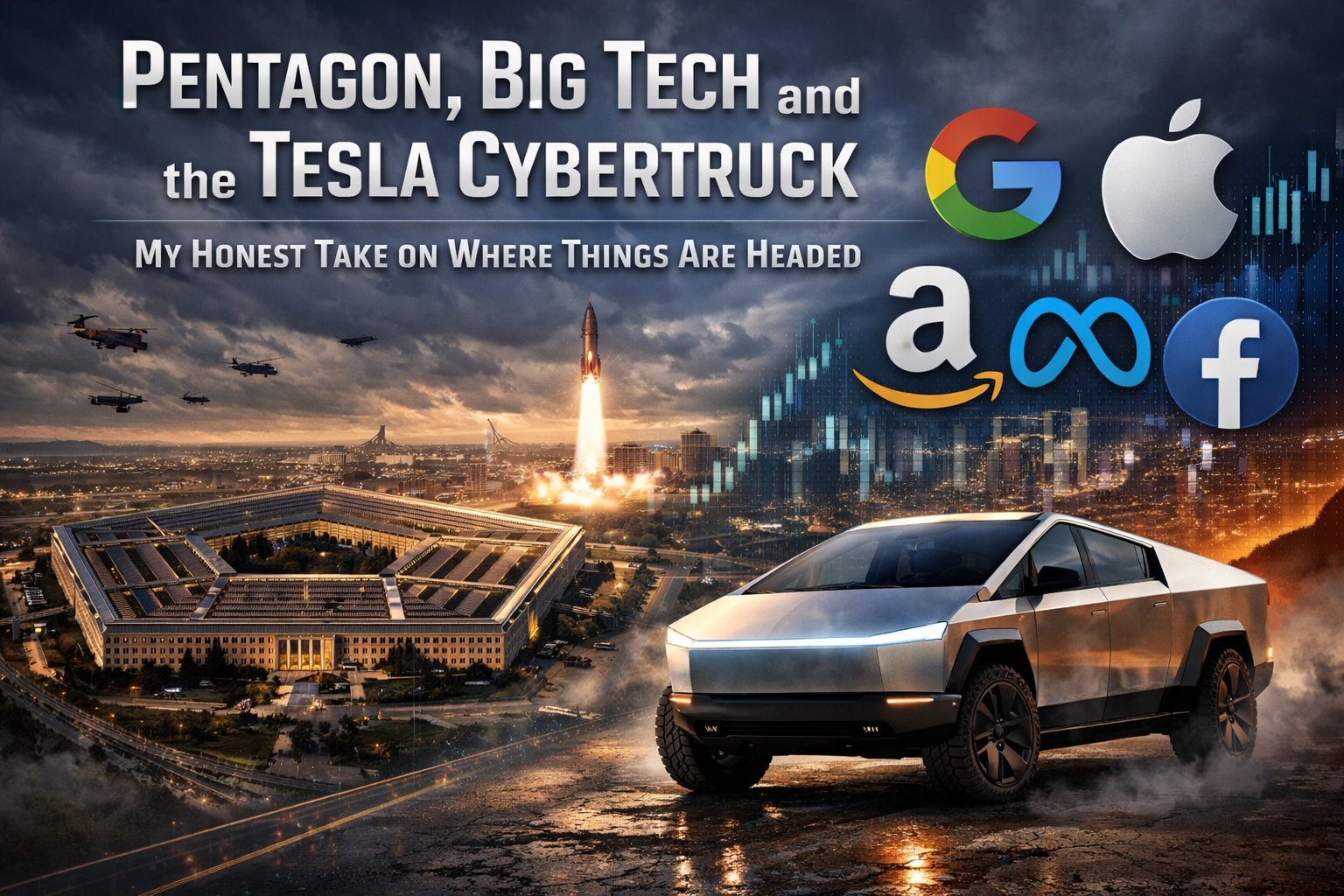
I still remember the first time I saw the Tesla Cybertruck unveiled by Elon Musk. I was sitting with a friend, half-expecting another sleek sedan reveal… and then that angular, futuristic beast rolled out. We both laughed at first. It didn’t look real.
But fast forward to today, and suddenly we’re hearing conversations about the Pentagon, big tech companies, and vehicles like the Cybertruck all in the same breath. That’s when I realized—this isn’t just about a truck anymore. It’s about the future of technology, defense, and how the two worlds are slowly blending.
Let me break down what I’ve learned (and what genuinely surprised me).
How the Pentagon and Big Tech Are Getting Closer
A few years ago, I never thought I’d see companies like Tesla or Google even remotely connected to defense conversations. But things have changed.
The Pentagon has been actively working with big tech for:
- Artificial intelligence (AI)
- Autonomous systems
- Cybersecurity
- Advanced mobility solutions
And honestly, it makes sense.
Modern warfare isn’t just boots on the ground anymore. It’s data, automation, and speed. Big tech already dominates those areas.
Why This Partnership Matters
From my perspective, this shift is huge. It means:
- Faster innovation cycles
- Smarter defense systems
But it also raises questions. And I’ll be honest—I’ve had mixed feelings about it.
Where the Tesla Cybertruck Fits In
Now let’s talk about the star of the show: the Tesla Cybertruck.
At first glance, it looks like something out of a sci-fi movie. But when you dig deeper, you start seeing why it’s being discussed in defense circles.
Key Features That Stand Out
Here’s what caught my attention:
- Exoskeleton design – Built for durability
- Electric powertrain – Quiet and efficient
- High torque – Useful for tough terrain
- Advanced software – Constant updates and automation potential
I remember thinking, “This isn’t just a truck—it’s a platform.”
And that’s the key idea. The Cybertruck isn’t just about transportation. It’s about what you can build on top of it.
Could the Cybertruck Be Used by the Pentagon?
This is where things get interesting.
While there’s no official widespread military adoption (at least publicly), discussions around electric vehicles like the Cybertruck are growing.
Potential Use Cases
If I had to imagine practical scenarios, here’s what makes sense:
- Reconnaissance missions (quiet electric movement)
- Base transportation
- Logistics support in controlled environments
- Emergency response vehicles
One thing I’ve learned from following tech trends: the military doesn’t always invent from scratch anymore. They adapt what already works.
And Tesla has already proven its vehicles can handle extreme conditions.
My Personal Take: The Pros
I’ll admit, part of me is excited about this crossover between big tech and defense.
Here’s why:
Innovation Speeds Up
Big tech moves fast. Way faster than traditional government systems.
When companies like Tesla get involved, things don’t take decades—they take years.
Cleaner Energy Use
Electric vehicles could reduce fuel dependency.
That’s not just good for the environment—it’s strategically smart.
Smarter Systems
With software-driven vehicles, updates can improve performance over time.
That’s something traditional military vehicles never had.
My Personal Concerns (And Why They Matter)
That said, I’d be lying if I said I wasn’t a bit uneasy.
Too Much Dependence on Big Tech
What happens if private companies control critical systems?
It’s something I’ve thought about more than once.
Cybersecurity Risks
More software = more vulnerabilities.
If a system can be updated, it can potentially be hacked.
Ethical Questions
This is the big one.
Should companies that build consumer tech also contribute to military systems?
There’s no easy answer here.
Big Tech’s Growing Role in Defense
It’s not just Tesla.
Other companies are already deeply involved:
- Amazon (cloud infrastructure)
- Microsoft (AI and defense contracts)
From what I’ve seen, this trend isn’t slowing down—it’s accelerating.
And honestly, it’s reshaping how we think about national security.
Personal Tips From Following This Space
Over time, I’ve developed a few habits that helped me understand this topic better. If you’re curious like me, these might help:
Tip #1: Don’t Just Follow Headlines
Early on, I made the mistake of reacting to flashy news.
Now, I dig deeper—look at company announcements, tech specs, and real-world applications.
It changes your perspective completely.
Tip #2: Think in Systems, Not Products
The Cybertruck alone isn’t the story.
It’s how it connects with:
- AI systems
- Satellite communication
Once I started thinking this way, everything made more sense.
Related Keywords You Should Know
While exploring “pentagon big tech tesla cybertruck,” I kept running into these related ideas:
- electric military vehicles
- defense technology innovation
- autonomous vehicles in defense
- AI in military systems
- future of warfare technology
These terms help you see the bigger picture.
What the Future Might Look Like
If I had to guess, here’s where things are heading:
More Electric Military Vehicles
The Cybertruck might just be the beginning.
Increased AI Integration
Vehicles won’t just be driven—they’ll assist, analyze, and decide.
Stronger Public-Private Partnerships
The line between government and tech companies will continue to blur.
And honestly? That’s both exciting and a little unsettling.
Conclusion: My Final Thoughts on Pentagon, Big Tech, and the Tesla Cybertruck
Looking back, it’s wild how something that started as a “weird-looking truck reveal” turned into a serious conversation about defense and technology.
The connection between the Pentagon, big tech, and the Tesla Cybertruck isn’t just hype—it’s a glimpse into the future.
From my perspective, we’re entering a new era where:
- Technology drives defense innovation
- Private companies play a bigger role than ever
- Vehicles become intelligent systems, not just machines
And whether we like it or not, this shift is already happening.
Final Thoughts + Call to Action
I’d love to hear what you think about this.
Do you see the Tesla Cybertruck becoming part of military operations someday? Or does the idea of big tech working closely with defense make you uncomfortable.




Leave a Reply