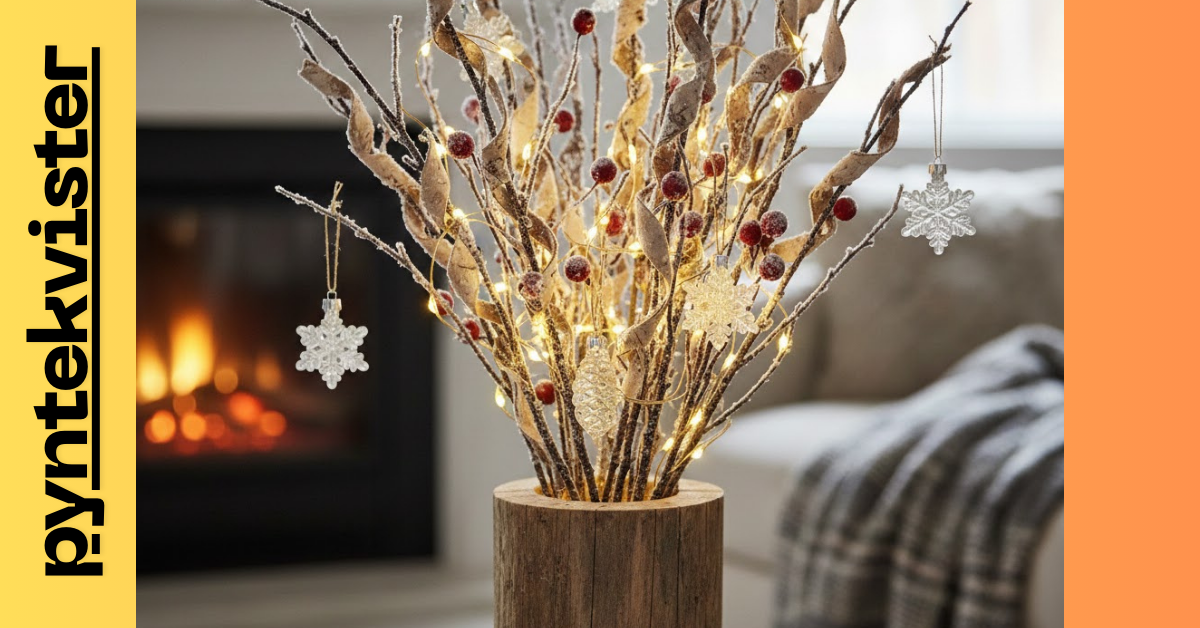
Last winter, I stood in my living room staring at a blank corner that felt… lifeless. The holidays were over, the fairy lights were packed away, and everything looked dull. I didn’t want a full makeover. I just wanted something simple. Something natural. That’s when I discovered pyntekvister — and honestly, I haven’t decorated the same way since.
At first, I didn’t even know how to pronounce it properly. But once I started experimenting with pyntekvister (decorative branches), my home began to feel warmer, calmer, and more “me.” What surprised me most was how such a small detail could completely transform a space.
If you’re curious about pyntekvister and wondering how to use them, let me share my experience.
What Are Pyntekvister?
Simply put, pyntekvister are decorative branches used for home styling. They can be natural twigs, dried branches, or even artificial decorative sticks designed to enhance interior décor.
You’ll often see them in:
-
Scandinavian-inspired homes
-
Minimalist interiors
-
Rustic or boho décor setups
-
Seasonal displays
The beauty of pyntekvister lies in their simplicity. They don’t scream for attention. Instead, they quietly elevate the atmosphere of a room.
And trust me — once you notice them, you start seeing them everywhere.
Why I Started Using Pyntekvister in My Home
I’ve always loved minimalist home décor, but I used to think it meant empty spaces and neutral colors only. Then I realized something important: minimal doesn’t mean boring.
When I added a tall glass vase filled with bare decorative branches near my window, something shifted. The space felt alive, but not cluttered.
Here’s what I noticed immediately:
-
The room looked taller.
-
Natural light played beautifully on the branches.
-
The overall aesthetic felt calm and intentional.
It was such a small change. But it made a huge difference.
5 Creative Ways I Use Pyntekvister
Over time, I’ve experimented with different ways to style pyntekvister. Some worked better than others (yes, I’ve had a few Pinterest fails). Here are the ideas that truly made an impact.
1. Statement Vase in the Living Room
This is my go-to.
I place tall decorative branches in a clear or matte ceramic vase. I prefer neutral colors — white, beige, or soft gray — because they highlight the natural texture of the branches.
Personal Tip #1:
Don’t overcrowd the vase. Fewer branches look more elegant. I learned this the hard way when my first arrangement looked like a small tree growing indoors.
2. Seasonal Pyntekvister Styling
One of the things I love most is how adaptable pyntekvister are.
-
In winter: I hang tiny ornaments or fairy lights.
-
In spring: I add faux blossoms or greenery.
-
In autumn: I wrap subtle warm-toned ribbons.
It’s such an easy way to refresh your seasonal décor without buying new furniture or expensive decorations.
3. Dining Table Centerpiece
For dinner parties, I use shorter decorative twigs in a low vase. It adds texture without blocking conversation across the table.
This works especially well for Scandinavian décor themes where simplicity is key.
4. Bedroom Calm Corner
I once placed a bundle of dried branches in a woven basket near my bedroom mirror. The result? Instant cozy vibes.
There’s something about natural elements in interior styling that makes a space feel grounded.
5. Wall-Mounted Branch Display
This one surprised me.
I mounted a sturdy branch horizontally on my wall and hung lightweight decorations from it. Photos, dried flowers, even small handmade ornaments.
It became a conversation piece.
Why Pyntekvister Work So Well in Modern Interior Design
There’s a reason decorative branches are popular in modern interior design trends.
They:
-
Add height without adding bulk
-
Introduce organic texture
-
Complement neutral color palettes
-
Fit both rustic and contemporary styles
In a world full of fast furniture and loud décor, pyntekvister feel refreshingly simple.
They don’t try too hard. And that’s exactly why they work.
Choosing the Right Pyntekvister
Not all branches are equal. I learned that quickly.
Here’s what I now look for:
Shape and Structure
Look for interesting curves or subtle asymmetry. Perfectly straight branches can feel stiff.
Thickness
Too thin, and they disappear visually. Too thick, and they overpower the space.
Color Tone
Natural wood tones are timeless. But black-painted branches can create a bold modern statement.
Personal Tip #2:
Always consider ceiling height. Tall ceilings can handle dramatic branches. In smaller rooms, shorter arrangements look more balanced.
Real vs. Artificial Pyntekvister
I’ve tried both.
Natural Branches
-
More authentic texture
-
Slightly imperfect (which I love)
-
Free if you collect responsibly
But they can shed or warp over time.
Artificial Decorative Branches
-
Low maintenance
-
Long-lasting
-
Great for consistent seasonal displays
If you’re busy or don’t want the hassle, artificial ones are totally fine. Honestly, no one can tell from a distance.
Common Mistakes I Made (So You Don’t Have To)
Let’s be real. I didn’t get it right immediately.
Here are a few mistakes I learned from:
-
Using too many branches
-
Choosing a vase that was too small
-
Ignoring proportion
-
Mixing too many decorative elements
The magic of pyntekvister lies in restraint.
Sometimes less really is more.
Why Pyntekvister Fit Perfectly with Scandinavian Style
If you love Scandinavian interior design, pyntekvister are practically essential.
Scandinavian homes focus on:
-
Natural materials
-
Light-filled spaces
-
Neutral tones
-
Functional simplicity
Decorative twigs blend seamlessly into this philosophy. They add visual interest without disturbing the clean aesthetic.
And even if you’re not fully committed to Nordic style, pyntekvister can still work in boho, farmhouse, or contemporary homes.
Budget-Friendly and Sustainable Décor Option
One thing I truly appreciate is how affordable this décor option can be.
You don’t need designer pieces.
You can:
-
Collect fallen branches from nature
-
Reuse them year after year
-
Refresh them with simple seasonal updates
It’s sustainable. It’s versatile. And it doesn’t require a big budget.
That’s rare in home décor these days.
Related Keywords Naturally Connected to Pyntekvister
As I explored this trend, I noticed it often overlaps with:
-
Decorative branches
-
Minimalist home décor
-
Scandinavian décor
-
Natural interior styling
-
Rustic home accents
All of these design ideas share one thing — simplicity with character.
Final Thoughts on Pyntekvister
If you had told me a year ago that branches would become one of my favorite décor elements, I probably would have laughed. But here we are. Pyntekvister taught me something important: you don’t need dramatic changes to refresh a space. Sometimes, subtle details create the biggest impact.
If your home feels a little flat or uninspired, try adding pyntekvister. Start small. Experiment. See how they change the energy of your space. You might be surprised — just like I was.





Leave a Reply